Cherries On Top · https://cherriesontop.news/history/what-does-afc-bournemouth-mean-91530
What's in a name? The true meaning of AFC Bournemouth

04.08.26, 20:27 Updated 19.08.26, 14:34 5 Minute Read
What’s in a name? That which we call the Cherries by any other name would sound just as sweet.
Butchered Shakespeare quotes aside, the history behind AFC Bournemouth’s name has led to many rumours and theories over the years.
A team’s name does not only reflect the area and history represented by a club, but it also informs the order sides are listed in directories and league tables.
For most of the Premier League’s history - and that of its obfuscated predecessor - the First Division, Arsenal have come first when all the teams are ranked in alphabetical order. That’s at least according to the Premier League itself, despite the fact that it should be Cherries listed first at the dawn of a new season whenever Bournemouth are in the top flight.
Alphabetically, AFC definitely comes ahead of Arsenal, but for some reason, the Premier League has Cherries third before a ball has been kicked.
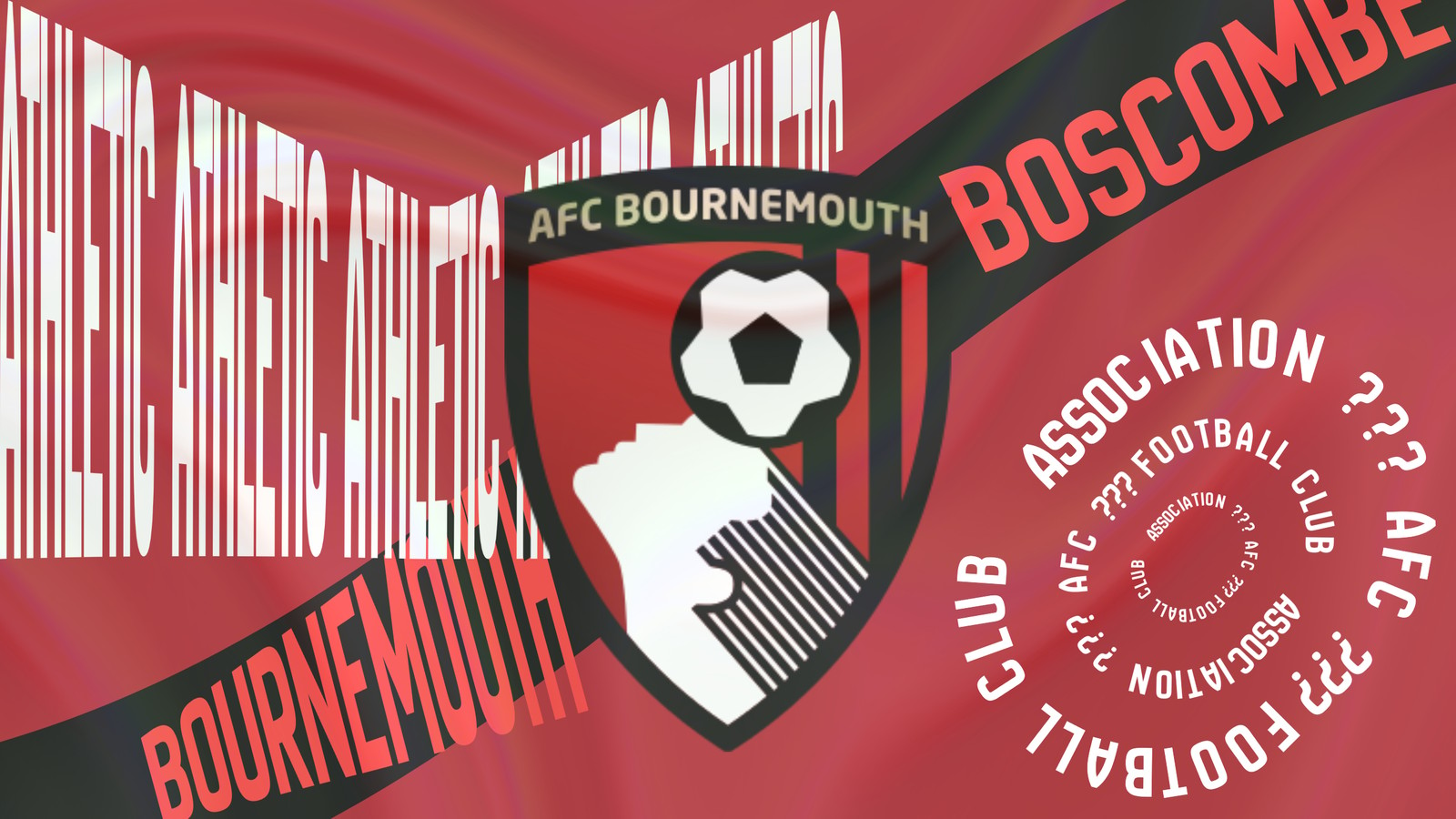
There should be one key takeaway from this article, and that is simply what the AFC in AFC Bournemouth stands for.
That would be nothing. The club is simply registered as AFC Bournemouth with both the FA and Companies House, making this in theory a very short article.
As the story goes, this was the brainchild of Dickie Dowsett, the forward-thinking former player-turned-commercial-manager that provided the silhouette for Cherries’ striking badge still used today, albeit updated and tweaked over the years.
By simply sticking AFC as a prefix, Cherries would be top of the alphabetical listing of Football League members. For some reason, the Premier League decide to omit this section of Cherries’ name, presuming that it is redundant in the same fashion that the FC’s that follow most clubs are quickly dropped.
But even if it is not explicitly written down, surely the AFC stands for something? Common nomenclature in footballing circles means that AFC is usually shorthand for Association Football Club, the first word only serving as a distinction between other codes of football, typically Rugby.
Of course, Dorset has not been a stronghold for either Rugby Union and Rugby League over the years, making this distinction unnecessary on the south coast.
However, if this was the case, Cherries would still find themselves below Arsenal - although in this year’s table they would claim alphabetical superiority over Aston Villa.
The other theory is that the A stems from Cherries’ previous name, when they were known as Bournemouth & Boscombe Athletic. Whilst Athletic Football Club is likely to be the implied meaning of AFC, formally including it in the club's name would again defeat Dowsett’s purpose, which was to have Cherries listed at the top of whatever league division they found themselves in.
But for all intents and purposes, the AFC is shorthand for Athletic Football Club. That is according to club historian Neil Vacher, who states: “There was endless discussion as to whether it's just AFC with nothing behind those initials or whether that's something behind them.
“I've been going through board minutes and all over the place, and I can only really report what I found recorded and that it was clearly meant to be Athletic Football Club Bournemouth.
“But it’s one of those things that just sort of got lost. It’s never been written in full. It’s always put as AFC.”
So was the prefix premeditated, a cunning plan to catapult Cherries into first place at the dawn of new campaigns? Partly, but Vacher explains that there was more behind the name change.
“I think there was an element of that, certainly that was evident in what I've been researching,” Vacher affirms when asked if there was truth to the story.
“There was also a desire to perhaps remove the rather sleepy image of the club. And AFC Bournemouth was very sort of out there at the start of the 70s.”
Interestingly, there was a chance that Athletic could never have been associated with Cherries.
Shortly after their election to the Football League in 1923, it was decided that the name Boscombe Football Club should be updated to reflect the wider footprint of Cherries’ support, which had now spread to the growing town of Bournemouth.
Five names were suggested: Bournemouth United, Boscombe & Bournemouth United, Bournemouth & Boscombe Town, Bournemouth County, and the eventual winner, Bournemouth & Boscombe Athletic.
Note how Bournemouth Football Club was not suggested – as there was already a Bournemouth Football Club, who currently ply their trade in the ninth tier of English football.
Names simply containing Bournemouth were ignored both out of respect for their neighbours, as well as to nip any potential confusion in the bud. The non-league side are usually referred to by their nickname - Poppies - to avoid confusion between their much bigger neighbours.
Over the centuries, both newspapers and managers have still managed to fall afoul of this mix-up.That includes former Cherries head coach Gary O’Neil during his tenure at Dean Court.
“I’m doing the job at the moment that I love and I’m really grateful to Bournemouth Football Club for allowing me to be in charge of this team for so long.” - Gary O'Neil quoted during his interim head coach spell
Even a manager as long in the tooth as Roy Hodgson - who was still playing when Cherries changed from Bournemouth and Boscombe Athletic to their current name - still didn't know the name of a side he faced on 10 occasions.
"I’m certain that the people of Bournemouth Football Club must be absolutely delighted with him." - Roy Hodgson quoted ahead of facing Gary O'Neil's Cherries towards the end of the 2022/23 season
It is unknown whether Bournemouth Poppies agree with the sentiments shared by O’Neil and Hodgson, but it must be said that they have not been approached for a light-hearted comment.
Just as Cherries’ attempt to end up at the top of the Football League directory was ignored by editors, so was their first name change.
Some outlets persisted by simply calling the Third Division newcomers Boscombe, whilst bizarrely some referred to the club by one of their rejected names, labelling them Bournemouth United.
Heading into their first season of European football, AFC Bournemouth is now a name not to be missed.
Related Topics

Jack Tanner Starting his journalism career covering local non-league football at the age of 14, Dorset-native Jack Tanner covered Cherries for the Bournemouth Daily Echo for the best part of four years. After a brief stint covering AFC Bournemouth on a freelance basis for national newspapers, Jack went on to cover boxing for The Independent.